
 The Global Gulf |
 October 4, 2026 |
A structural realignment is reshaping global corporate banking. As many international lenders grow more restrictive in deploying capital, highly liquid banks in the Gulf Cooperation Council are stepping forward. According to Khaled Salhab, EVP of Group Corporate and Institutional Banking at QNB Group, these institutions now command more than $3.9 trillion in combined assets, based on figures from the GCC General Secretariat. That strength lets them finance major infrastructure projects, cross-border trade and corporate expansion, both within the region and worldwide.
From Destination Market to Global Platform
The GCC has long been seen as an important destination for capital and trade. Its role is now broadening. Backed by economic diversification, sophisticated infrastructure, substantial sovereign wealth and well-capitalised banks, the region is becoming a base from which international companies can coordinate and finance increasingly complex operations.
Qatar offers a clear example of two-way capital flows. At the end of 2025, the National Planning Council reported that the country’s inward foreign direct investment position reached QR165.4 billion ($45.4 billion). Its outward position rose 8.1 percent year-on-year to QR210 billion. Together, the figures describe an economy that draws in international investment while deploying capital to support opportunities beyond its borders.
What Companies Are Asking
Salhab says the shift is changing how multinational firms make decisions. Companies are no longer asking only which market to enter next. They want to know how capital can be moved across borders, where regional liquidity should be managed and which banking partner can link operations across multiple currencies, regulatory settings and time zones.
Meeting those needs takes more than a strong balance sheet. It calls for digital trade finance platforms that speed up transactions, payment systems that support international operations and local expertise that turns global ambition into practical results. These capabilities are becoming central to how companies manage working capital, strengthen supply chains and pursue growth across Asia, Africa and Europe.
Treasury and Trade Finance Move to the Centre
As corporate operations spread across more countries, treasury and trade finance are shifting from support roles to the core of business strategy. Companies want clearer visibility over liquidity and payment processes that are transparent and efficient. They also need trade documents processed quickly while meeting regulatory rules in several jurisdictions.
Digital change in corporate banking has therefore become a strategic enabler of growth. The move from paper-based guarantees to integrated digital trade finance platforms is one example. By replacing manual steps and cutting processing times, these tools help companies act on commercial opportunities faster. Their value goes beyond single transactions, since they strengthen the financial infrastructure behind wider trade flows.
QNB is putting these tools to work at scale. In 2024, the group facilitated more than QR212 billion in trade finance solutions, a 12.7 percent increase from the year before. Its international payment network also widened direct currency coverage from 30 to 130 markets, improving the speed, security and transparency of client transactions.
National Visions Drive Investment
Across the Gulf, governments are pursuing national visions that steer money into new industries and infrastructure. Saudi Arabia is building new tourism destinations, technology industries and urban centres under Vision 2030. The UAE is investing in aviation and logistics capacity to reinforce its position as an international commercial hub.
In Qatar, QatarEnergy is developing the 2,000-megawatt Dukhan solar power plant with the Engineering and Construction Group of South Korea’s Samsung C&T. The project shows how Qatar National Vision 2030 brings together state ambition, major investment and international expertise. Delivering projects of this size requires banks that can raise capital, coordinate several partners and support complex, long-term development.
Examples Across the Network
That role is already visible across QNB’s international footprint. In Egypt, the bank’s local subsidiary took part in financing Green Sky Capital’s $500 million sustainable aviation fuel facility, supporting an emerging clean energy value chain. QNB Egypt also arranged an EGP11.98 billion ($231 million) syndicated loan for new marine berths at East Port Said Port, strengthening infrastructure that supports international trade.
Salhab says these deals show how regional banking strength can advance national priorities and finance growth in markets abroad. With a presence in more than 28 countries across Asia, Europe and Africa, QNB combines balance-sheet capacity with international reach and local expertise to help clients mobilise capital, facilitate trade and complete complex transactions across borders.
The New Crossroads of Global Commerce
The companies best placed for future growth, Salhab argues, will be those able to connect capital with opportunity, central oversight with local agility, and regional strength with global reach. The banking sector, he adds, needs to support that goal.
As priorities shift and international commerce is reshaped, the GCC and its financial institutions appear well positioned to play a larger part in connecting markets and financing growth around the world. Strong liquidity, digital capability and deep regional knowledge give Gulf banks a solid base. For businesses planning cross-border expansion, that combination could prove to be a meaningful advantage in the years ahead.
This article draws on analysis by Khaled Salhab, EVP, Group Corporate and Institutional Banking at QNB Group.
Also Read:
Related Articles
Gulf States Strengthen Strategic Ties With Wash...
The red-carpet welcome given to Chinese leader Xi Jinping in Washington last week stood in contrast to the modest policy […]
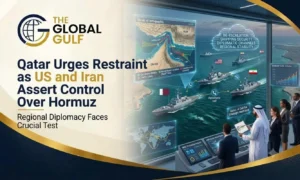
Qatar Urges Restraint as US and Iran Assert Con...
The war of words between the United States and Iran over control of the Strait of Hormuz has sharpened, as […]
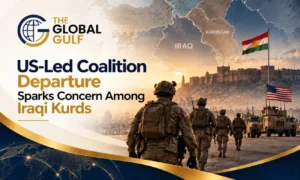
US-Led Coalition Departure Sparks Concern Among...
ERBIL — As the deadline for the withdrawal of the US-led coalition from Iraq draws near, residents of Erbil are […]

MENA Sovereign Investment Faces Decline From Re...
Sovereign wealth funds in the Middle East are expected to deploy less capital this year than at their 2025 peak, […]