
 The Global Gulf |
 October 4, 2026 |
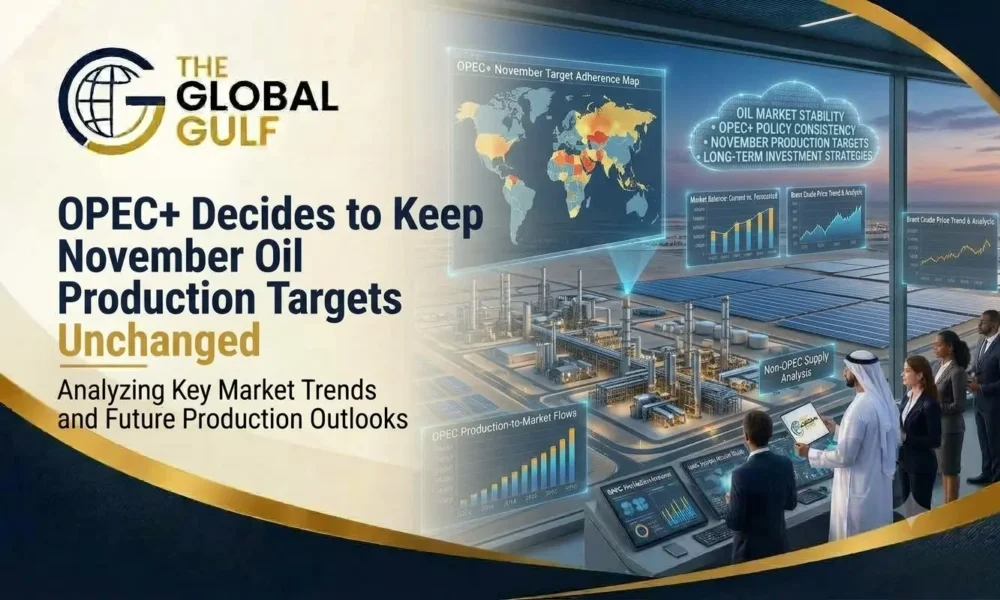
RIYADH: The OPEC+ Joint Ministerial Monitoring Committee agreed on Sunday to keep oil production targets steady for November. The decision came at the group’s 68th meeting, which was held by videoconference.
A Review of Market Conditions
During the session, committee members reviewed current conditions in the oil market and reaffirmed the central role of the Declaration of Cooperation in supporting global energy market stability. The declaration is the framework under which OPEC members and participating non-OPEC producers coordinate their output decisions.
The panel also examined crude oil production data for July and August 2026. It noted the commitment of OPEC members and participating non-OPEC oil-producing countries to the declaration, a sign that the group wants to project unity at a time of heavy pressure on energy markets.
Protecting Shipping Routes
One of the strongest messages from the meeting concerned the security of supply routes. The committee stressed the importance of protecting international maritime shipping lanes so that energy supplies can flow continuously and without interruption.
That point carries weight given the tension around key waterways, including the Strait of Hormuz, where rival claims of control and the threat of disruption have kept traders on edge in recent months. Any hold-up along these routes can quickly affect prices, delivery schedules and the confidence of buyers.
Concern Over Attacks on Infrastructure
The committee also voiced concern over attacks targeting energy infrastructure. It noted that restoring damaged facilities to full operating capacity is costly and time-consuming, and that such damage could affect overall supply availability.
In its statement, the committee warned that any actions that undermine the security of energy supplies, whether by targeting infrastructure or disrupting international maritime routes, could increase market volatility. Such actions, it added, would also weaken the collective efforts made under the Declaration of Cooperation.
The wording reflects a wider worry among producers. Repairs to refineries, pipelines and export terminals can take months, and even short outages can ripple through global fuel markets.
Monitoring Compliance
The committee reaffirmed that it will continue to monitor compliance with the production adjustments agreed at the 38th OPEC and non-OPEC ministerial meeting, held on Dec. 5, 2024, under the OPEC+ cooperation framework. Tracking whether members stick to their agreed levels is a core task of the panel, since uneven compliance can blunt the effect of any collective decision.
It also said it would closely watch market conditions. The committee kept the authority to hold additional meetings, or to call a full OPEC and non-OPEC ministerial meeting, in line with the decisions of the 38th ministerial meeting. This flexibility lets the group respond quickly if conditions change sharply before the next scheduled review.
Why a Steady Course Makes Sense
Holding targets unchanged signals caution. With supply routes under threat, infrastructure vulnerable and prices sensitive to every headline, producers appear unwilling to add new uncertainty through a change in output policy. Keeping the current approach gives markets a predictable baseline while the group watches how events develop.
For consumers and businesses, a steady policy means no new intentional supply shift from OPEC+ for now. Prices, however, may still move on factors outside the group’s control, such as security incidents, shipping disruptions and the pace of repairs to damaged facilities.
What Comes Next
The committee’s next meeting, its 69th, is scheduled for Nov. 29. Between now and then, analysts will track production data, compliance levels and developments in the wider region. Any major shift in supply security or demand could prompt the committee to act sooner than planned.
For now, the message from Riyadh is one of continuity. OPEC+ is staying the course, stressing cooperation and calling for the protection of the shipping lanes and facilities that keep global energy moving.
Also Read:
Qatar Urges Restraint as US and Iran Assert Control Over Hormuz
How the GCC Is Strengthening Its Position in Global Commerce
Related Articles

Saudi Consumer Spending Tops $3 Billion Amid St...
Oil Slips Over 1 Percent as Hormuz Attacks Meet US Move to Ease Shipping Costs RIYADH: Oil prices fell more […]
Gulf Countries Lead Global Remittance Outflows ...
RIYADH: Gulf Cooperation Council countries recorded the highest value of outward workers’ remittances in the world in 2025, with transfers […]

Islamic Development Bank Approves $391 Million ...
Saudi Princess Says Climate Goals and Energy Security Must Go Hand in Hand RIYADH: Environmental commitments and reliable energy supplies […]
Central Banks of UAE and Syria Agree to Deepen ...
RIYADH: The central banks of the UAE and Syria have signed a memorandum of understanding on financial and technical cooperation, […]